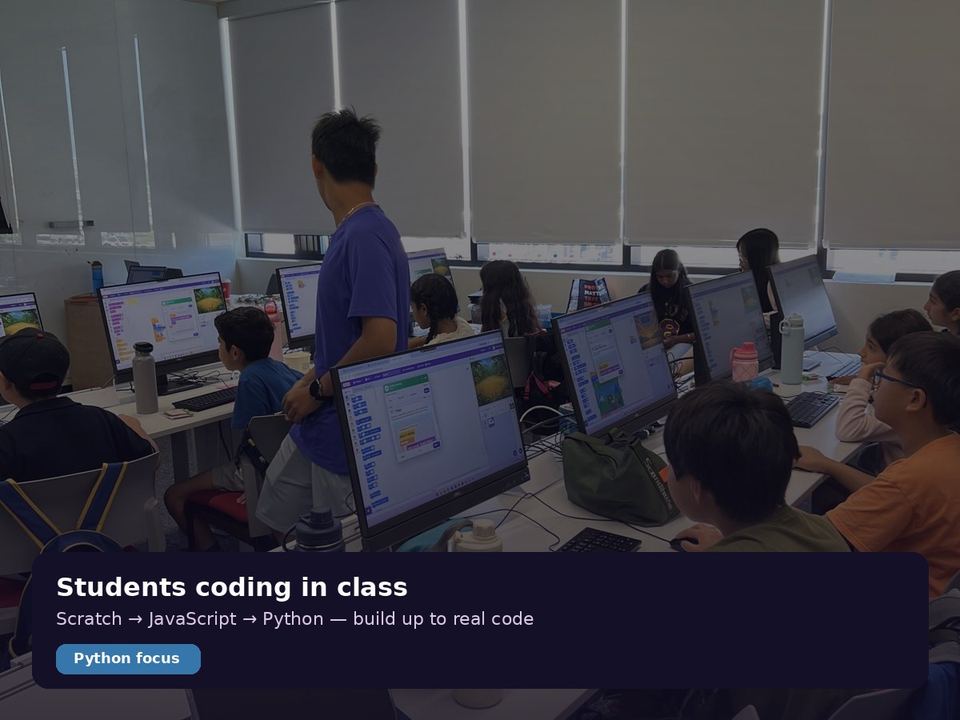







In August, an eight-year study flipped the usual screen-time story
In August 2026, researchers on Finland’s PANIC study published an eight-year follow-up of 260 children (124 girls, 136 boys, average age 15.8). They had expected more screen hours to show up as weaker thinking in the teen years. The CogState scores went the other way: more cumulative self-reported screen time from childhood was associated with faster reaction times and better working-memory accuracy in adolescence. Association, not proof that phones cause smarter teens. The authors said so.
Doctoral researcher Petri Jalanko of the University of Jyväskylä named the part that actually travels:
“Presumably, the essential point here is what kind of things they do in their screen time. Teachers and parents should encourage children to use devices and screens in such ways that promote active thinking, problem-solving, creativity and learning.”
And the close: “We should not regard screen time solely as harmful but seek balance between physical activity and screen time that promotes active thinking.”
Source: University of Jyväskylä / ScienceDaily, 17 August 2026. Journal: Jalanko et al., Pediatric Exercise Science 38(3), 2026. DOI: 10.1123/pes.2025-0083.
Takeaway before the bench
Hours are a weak label. A screen that waits, then senses, then scores is one kind of hour. A screen that hides a secret and answers higher or lower is another. Both are the “active thinking” Jalanko named — not a feed you watch.
On 1 September 2026, CodeSky’s Markham afterschool ran two of those screens as 15-minute builds. Same starters as the lab. Paste. Run. Change one number.
Lab 1 — It times your tap (Arduino)
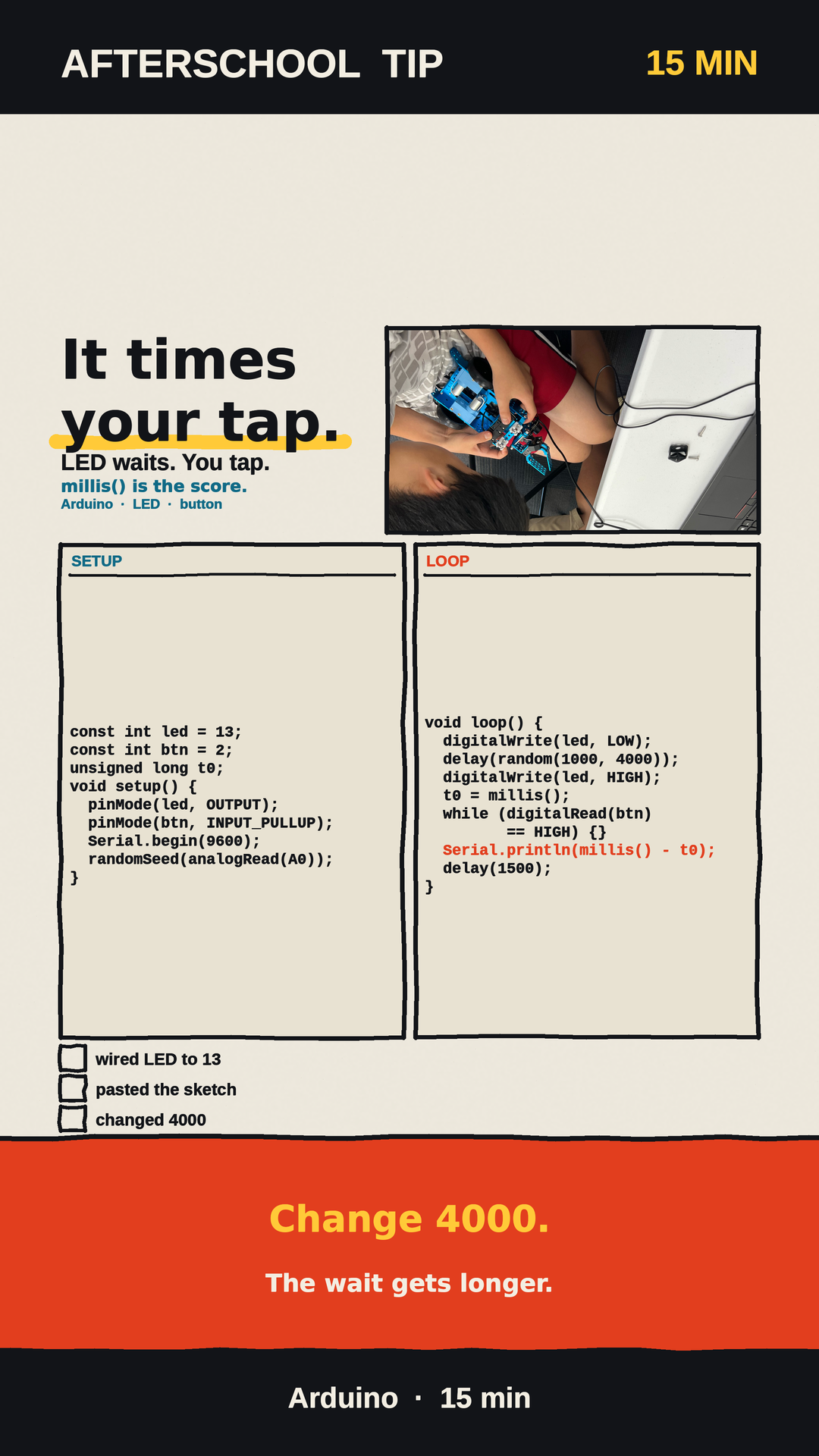
LED waits. You tap. The board prints milliseconds. millis() is the score.
Wire the LED to pin 13 (long leg through a 220Ω resistor, short leg to GND). Wire the button between pin 2 and GND. Pin 2 is INPUT_PULLUP. Serial Monitor at 9600. When the LED lights, tap.
Takeaway: change 4000. The wait gets longer. The board did not get faster. The random window did. Same move the Finnish teens were scored on — reaction time — except here the kid wrote the clock.
const int led = 13;
const int btn = 2;
unsigned long t0;

void setup() {
  pinMode(led, OUTPUT);
  pinMode(btn, INPUT_PULLUP);
  Serial.begin(9600);
  randomSeed(analogRead(A0));
}

void loop() {
  digitalWrite(led, LOW);
  delay(random(1000, 4000));
  digitalWrite(led, HIGH);
  t0 = millis();
  while (digitalRead(btn) == HIGH) {}
  Serial.println(millis() - t0);
  delay(1500);
}
The loop does not race. Dark. Random wait 1000–4000 ms. Light. Store t0. Sit in while until the button goes LOW. Subtract. Print. That is wait, then sense.
Lab 2 — It says higher (Python)
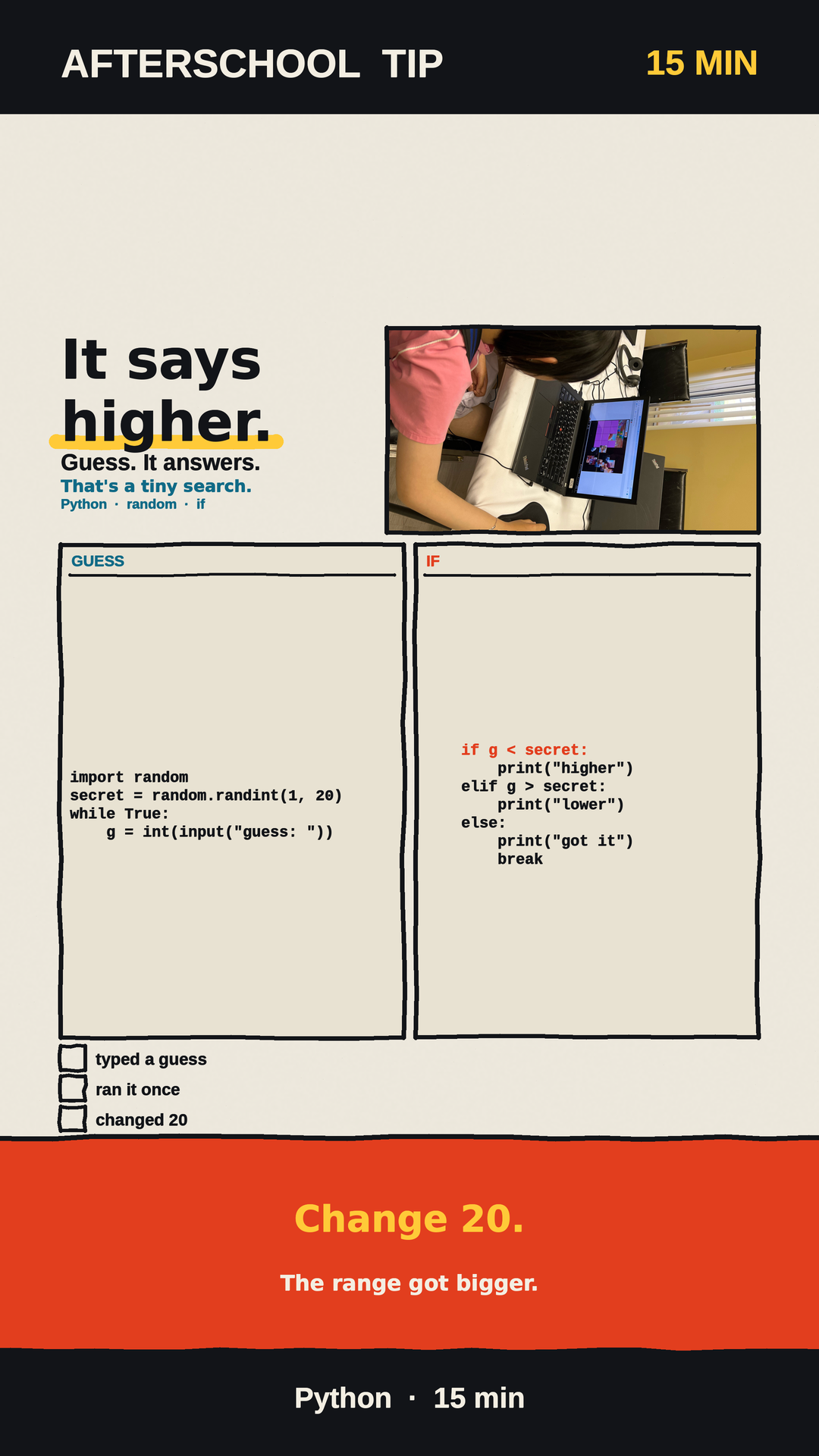
Guess. It answers. One loop, three branches. random.randint hides 1 to 20.
Type a guess. Compare. Branch. Three possibilities, three if paths. A first-day CS1 classic — guess 1–100, then notice that guessing the middle cuts the leftover numbers in half — is the same fork, written down.
Takeaway: change 20 to 100. First-guess probability drops from 1/20 to 1/100. The three answer types do not change. The secret did not get smarter. The range did.
import random
secret = random.randint(1, 20)
while True:
    g = int(input("guess: "))
    if g < secret:
        print("higher")
    elif g > secret:
        print("lower")
    else:
        print("got it")
        break
What both labs train
Arduino trains a pause: do not tap in the dark; wait for the LED, then sense, then score. Python trains a fork: compare, then branch. Named once, in plain English, that is computational thinking at the bench.
Same DIY rule: change one number and say what moved.
A question to leave with
If the LED wait window doubles from 4 seconds to 8, and your printed time stays about 250 ms, what got slower — you, or the wait? If the Python range jumps to 1–100 and you still guess 1, 2, 3…, what is the program doing that you are not?
Walk in
CodeSky is a walk-in coding afterschool for kids 7–18 at 9833 Markham Rd Unit 2, Markham, ON L6E 0E5. Trial class: show up, build one of these, leave with the starter. codesky.ca · info@codesky.ca