





Parents ask it often: can coding help kids host Thanksgiving dinner? In our Markham classroom the honest answer is simple — what helps is not a recipe. It is writing the goal, the checklist, the done line, and the edge cases before anyone starts cooking. Four questions on paper beat a Saturday scramble.
Why this matters
AI can type code. It cannot replace a kid who can write the goal, the checklist, the done line, and the edge cases — before the feast waits for Saturday (or they hand the prompt away).
A real classroom case: Markham Thanksgiving dinner prep
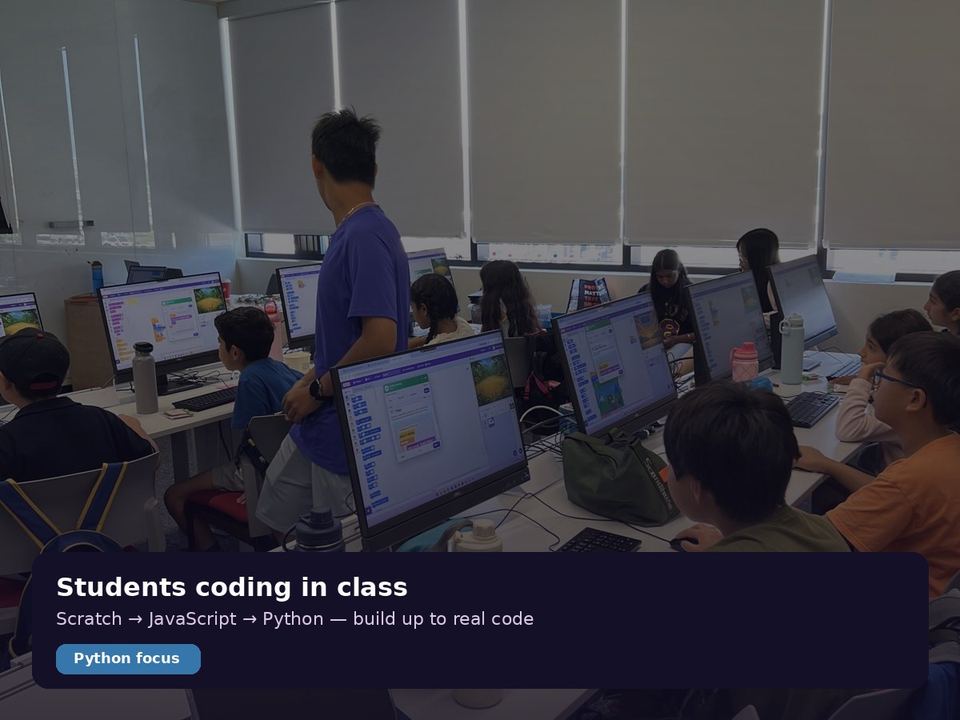
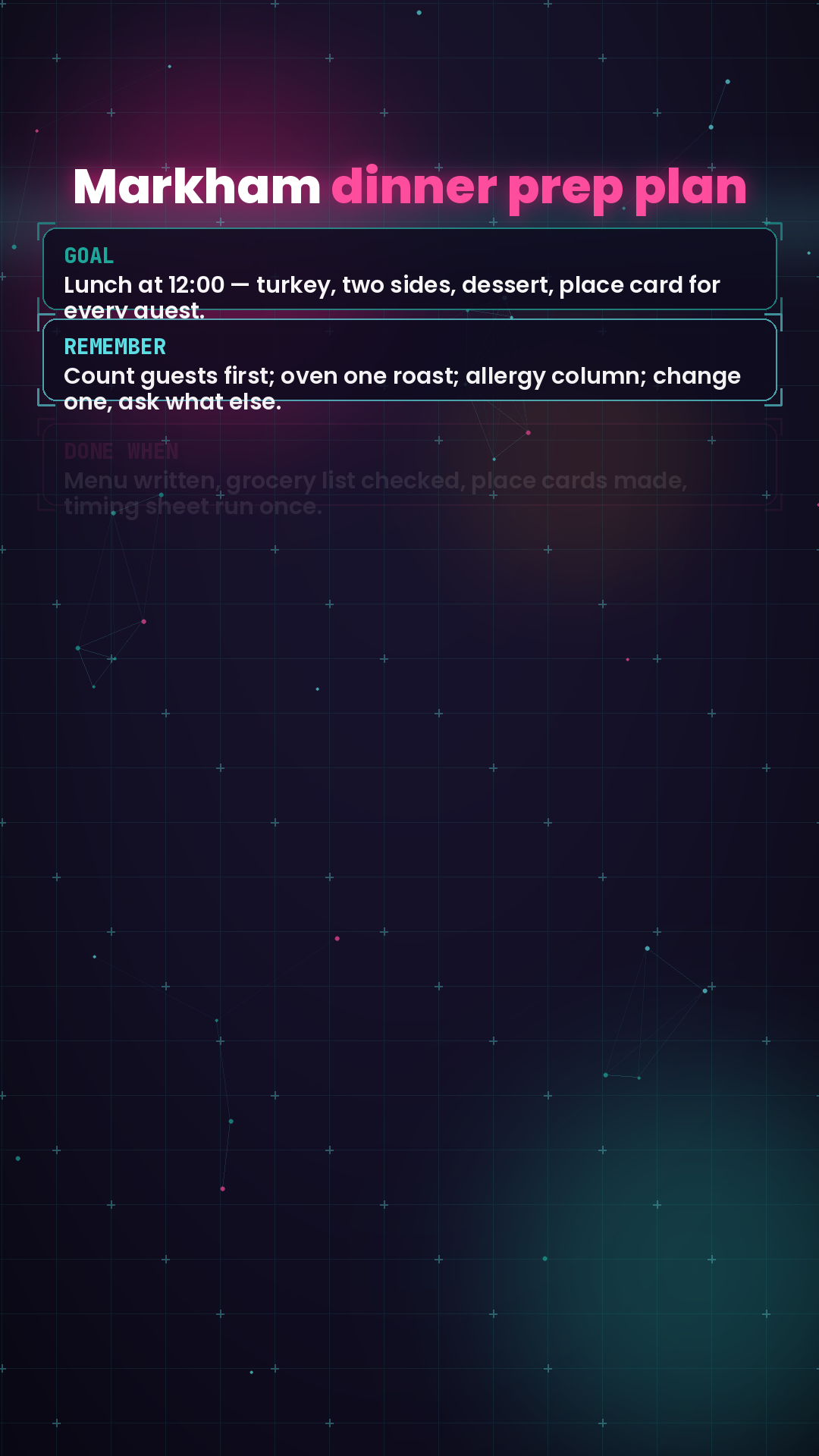
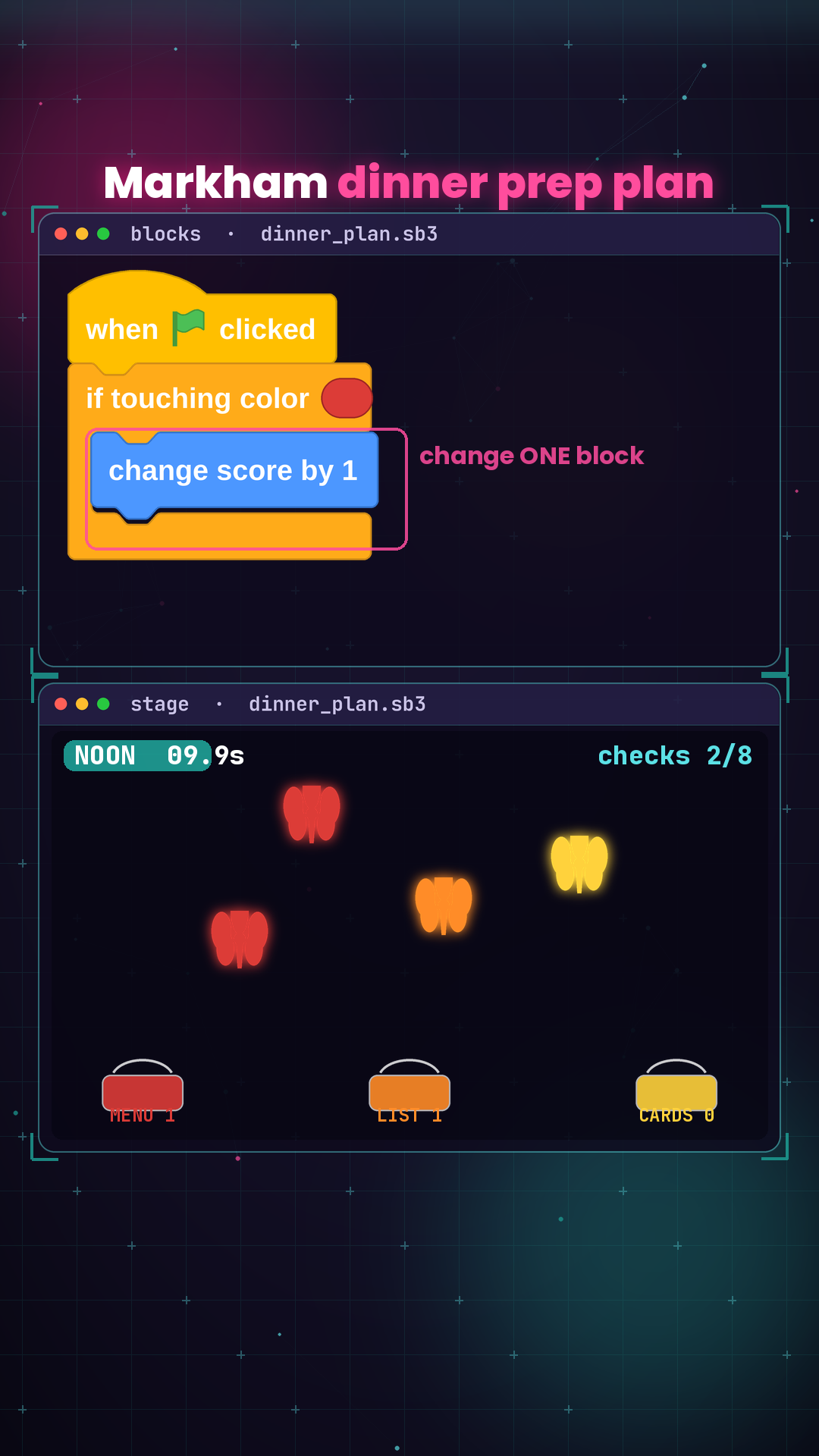
Last month at afterschool in Markham we used a Thanksgiving dinner prep plan kids can see and say out loud — turkey main, two sides, dessert, and a place card for every guest. We paused and wrote four questions on paper before anyone started cooking.
|
Goal lunch 12:00 · turkey · 2 sides · dessert · place cards |
Remember count guests · one roast · allergy column · change one, ask |
Done when menu · grocery checked · place cards · timing sheet once |
Edge +2 guests · oven breaks · peanut allergy · dessert forgotten |
Our 2026-09-29 Xiaohongshu note used this exact dinner-prep beat: write the four questions first, then cook.
Why this still matters when AI can write code
Claims below are grounded in that teaching note — not an external product case with published accuracy metrics.
- AI does not remove the need to name the goal and the done line. “Thanksgiving lunch at 12:00 with turkey, two sides, dessert, and a place card for every guest” is a different job from “make any feast look finished.” If a kid (or an AI prompt) muddles those, the next plan that comes back solves the wrong problem.
- The useful state is tiny on purpose. You only hold guest count, one-roast oven capacity, the allergy column, and the timing sheet — not the whole holiday weekend. That is abstraction: keep what the next check needs, drop the rest.
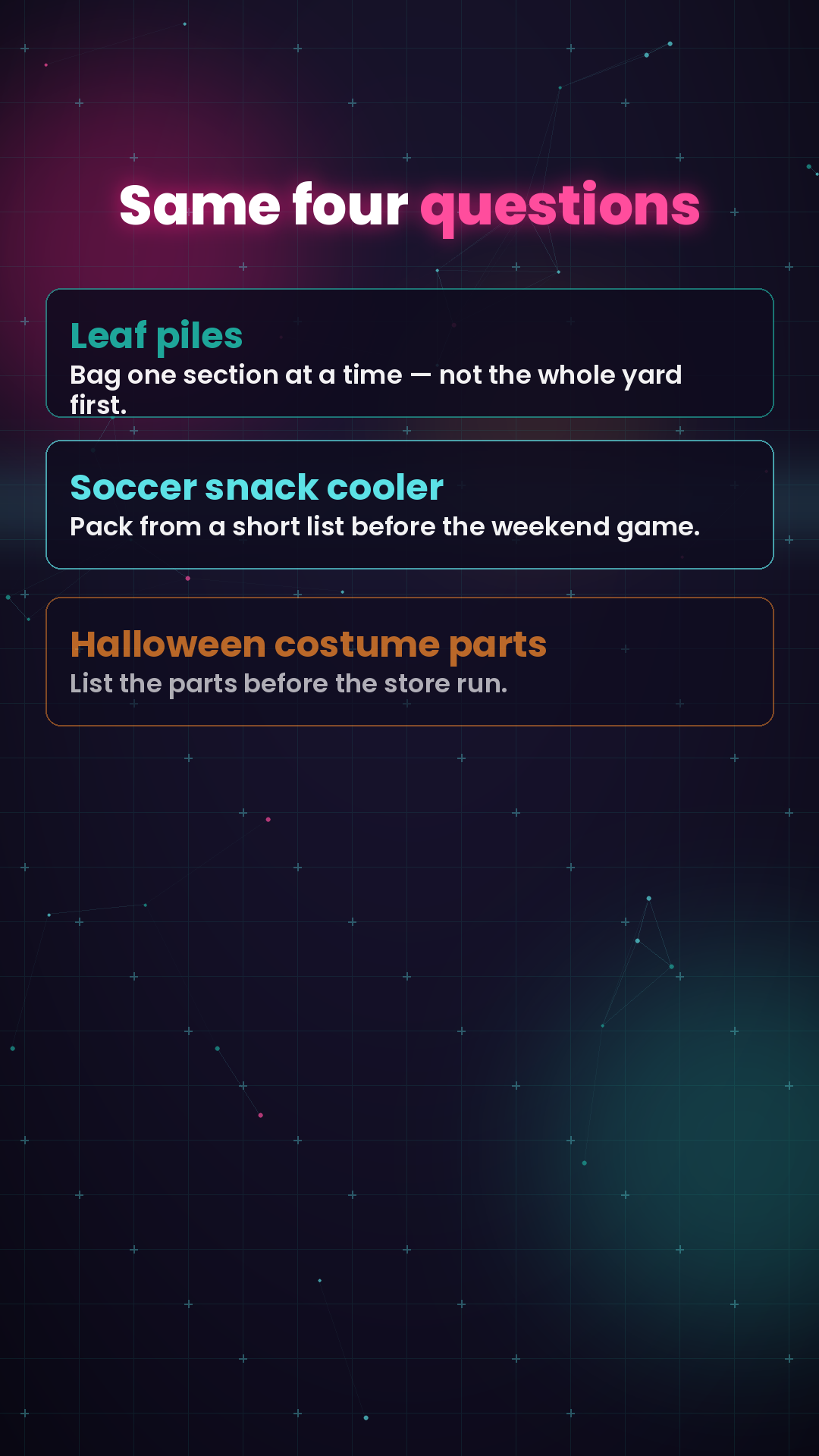
- The four questions and edge cases are the algorithm. Write Goal → Remember → Done when → Edge → handle two extra guests, a broken oven, a peanut allergy, and a forgotten dessert. The same four-question habit transfers to bagging leaf piles one section at a time, packing a weekend soccer snack cooler from a short list, or listing Halloween costume parts before the store run. Contest-style questions inspired by CCC Junior, CCC, BCC, and school contests reuse those moves — kids who want to sit those register on their own; CodeSky is not an official contest program and is not affiliated with Waterloo or CEMC.
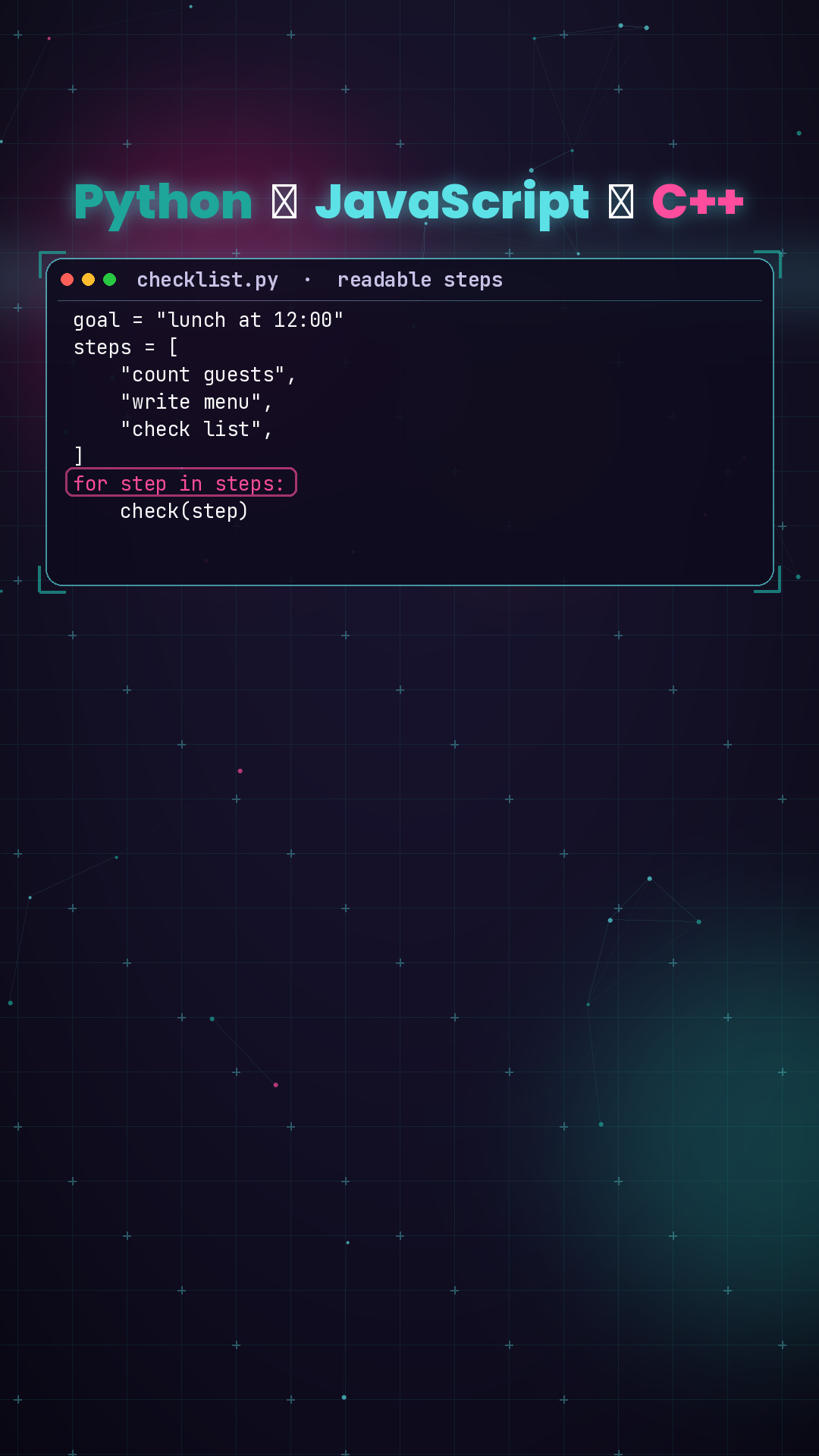
- Languages are tools on a path, not the answer. Early work often uses Python so the checklist steps stay readable; JavaScript when the same idea becomes something clickable on a screen; C++ later when speed and structure matter. Tools change; write the goal, the checklist, the done line, and the edges first does not.
So AI’s ability to type code does not cancel a thinking-first start. It raises the value of kids who can write the four questions, name the done line, and handle the edge cases before they ask a model — or a classmate — to invent the menu.
Three steps kids can name
We practice the same shape on the bench:
1 · Write the four questions — Goal / Remember / Done when / Edge (dinner, leaf bags, soccer cooler, costume parts)
2 · Name the done line — menu, grocery list, place cards, timing sheet run once
3 · Handle the edges — +2 guests, broken oven, peanut allergy, forgotten dessert
write the goal → checklist → done line → edges first
Computational thinking kids can own — before AI (or a classmate) invents the menu.
- Decomposition — Goal / Remember / Done when / Edge
- Abstraction — hold only guest count, oven capacity, allergy column, and timing sheet (not the whole holiday weekend)
- Algorithms — write Goal → Remember → Done when → Edge → handle +2 guests, broken oven, peanut allergy, forgotten dessert
- Pattern recognition — same four questions on leaf bags / soccer snack cooler / Halloween costume parts / contest-style work
Try this at CodeSky Markham
Walk-in coding afterschool for ages 7–18. Write the four questions before the feast waits for Saturday.
9833 Markham Rd Unit 2, Markham, ON L6E 0E5
Email info@codesky.ca · Comment TRIAL on Instagram @codeskyca
Follow CodeSky
Instagram @codeskyca · 小红书 / RedNote · WeChat 公众号: search codeskyca
Sources: CodeSky Xiaohongshu note pack 2026-09-29-学编程能帮孩子办好感恩节家宴吗 (Markham Thanksgiving dinner-prep case; Python → JavaScript → C++ pathway; contest-style disclaimer).