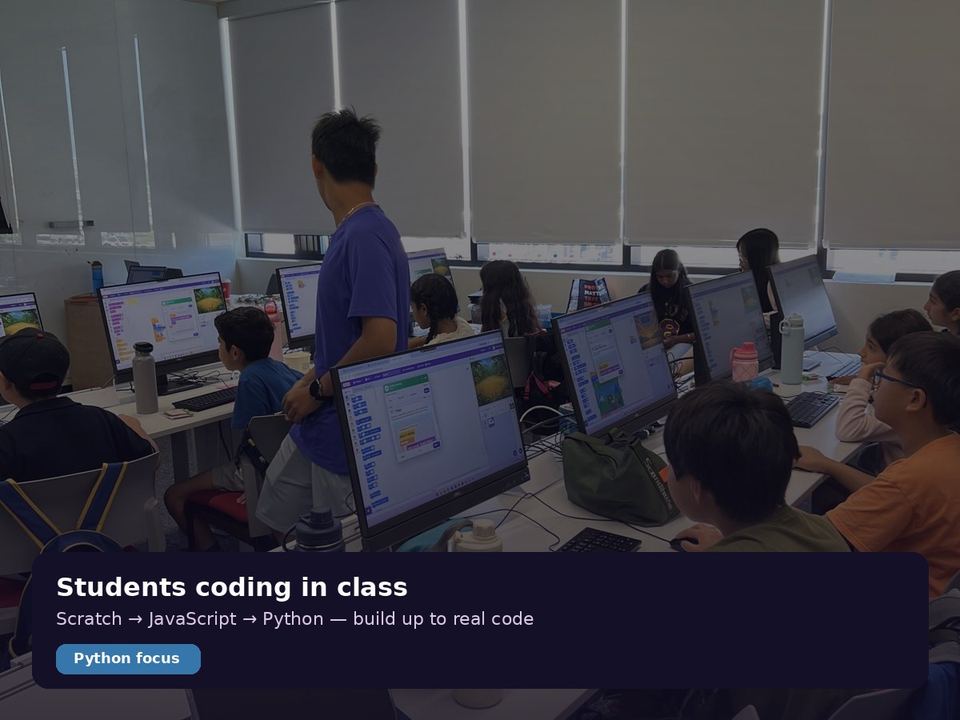






On a Wednesday afternoon in Markham, a kid builds a small Scratch project: when the computer hears music, the stage lights change color. They test it, notice it reacts too fast, change one number, and try again. Notice, decide, act, test — that same simple loop is what Apple is now trying to stretch across a whole household. Reporting: The Rundown Tech, Jennifer Mossalgue, Oct 13 2026.
Why this matters
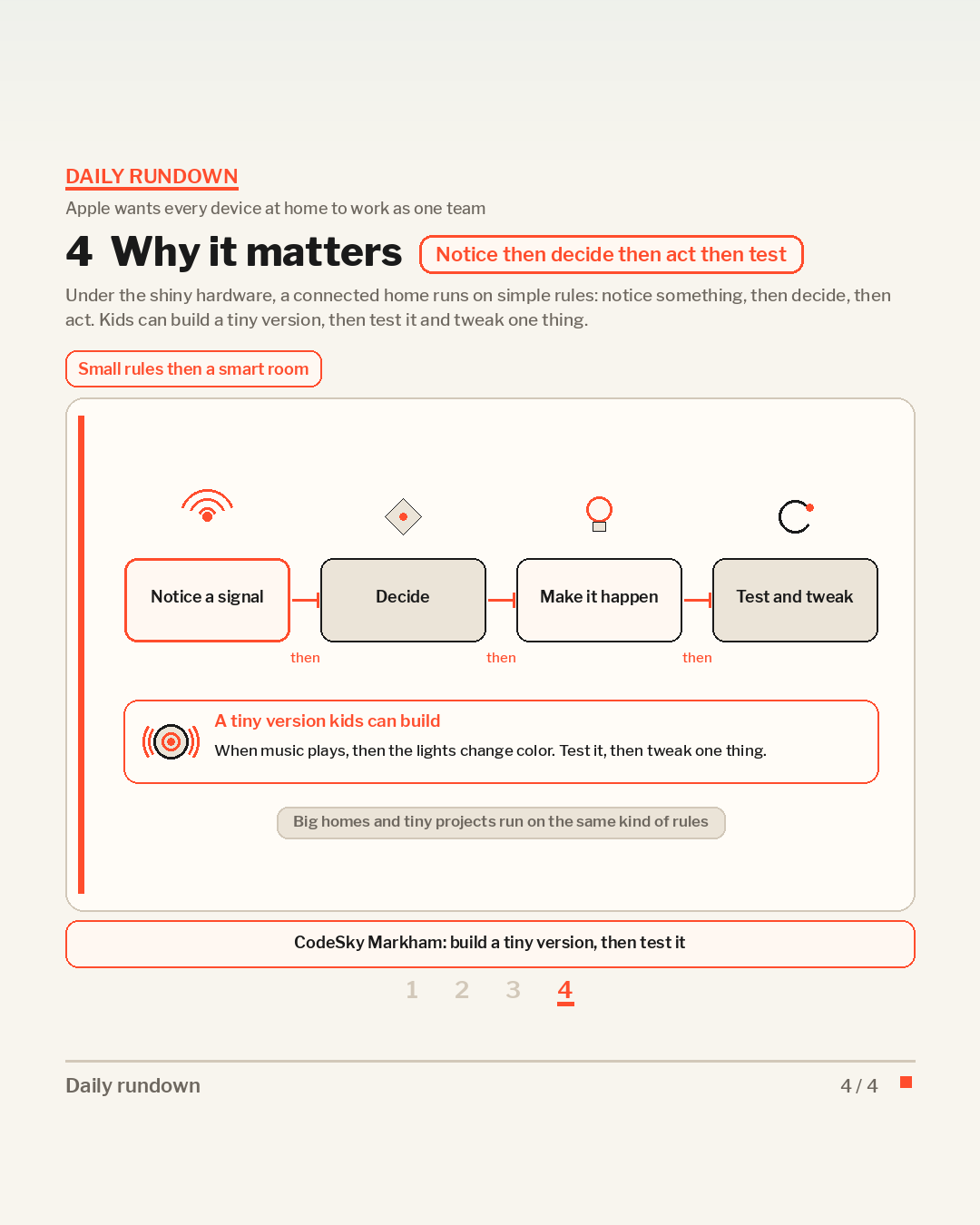
AI can glue devices together on a slide deck. It cannot replace a kid who can notice a signal, decide what to do, make it happen, then test and tweak — before they hand the whole house to a prompt.
A real product case: Apple's "Welcome Home" smart-home lineup
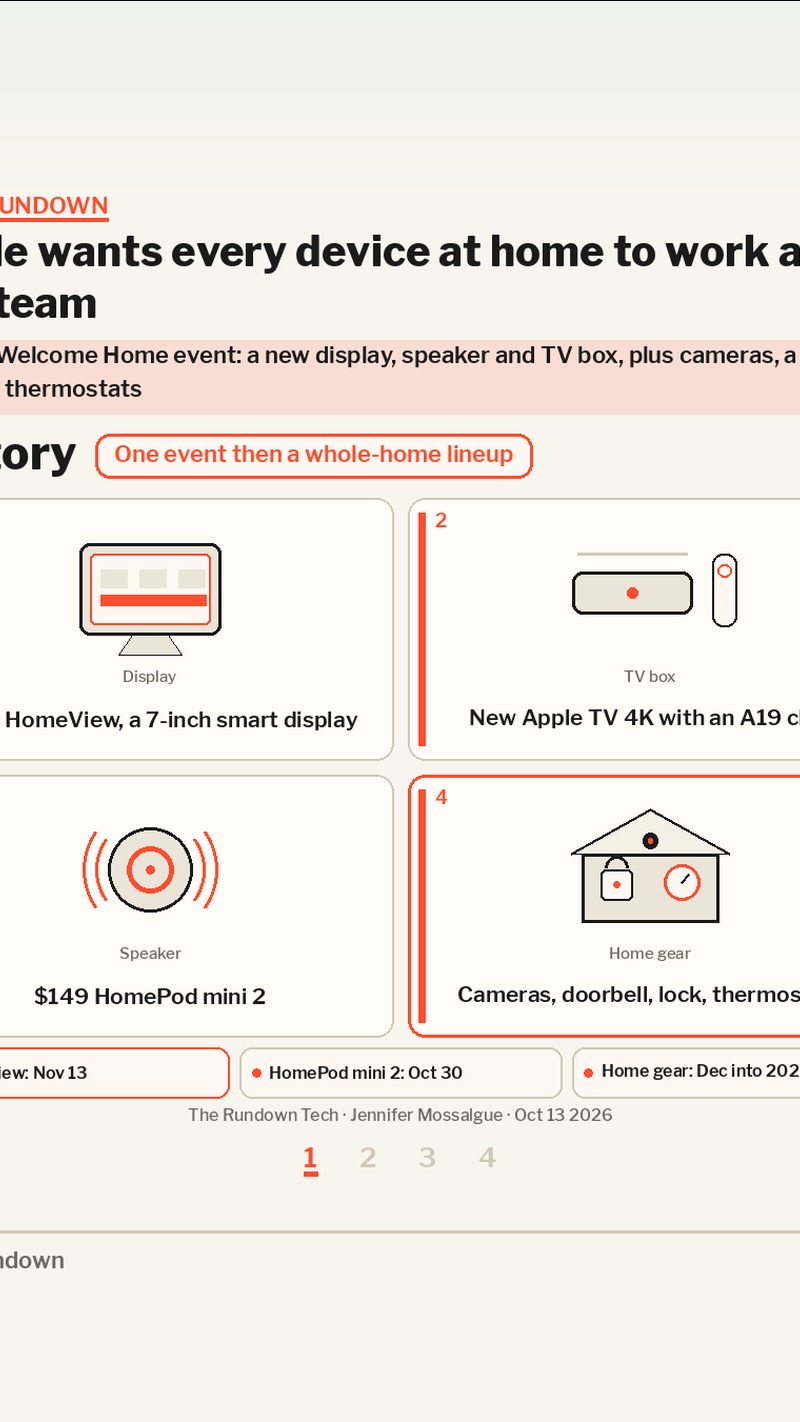
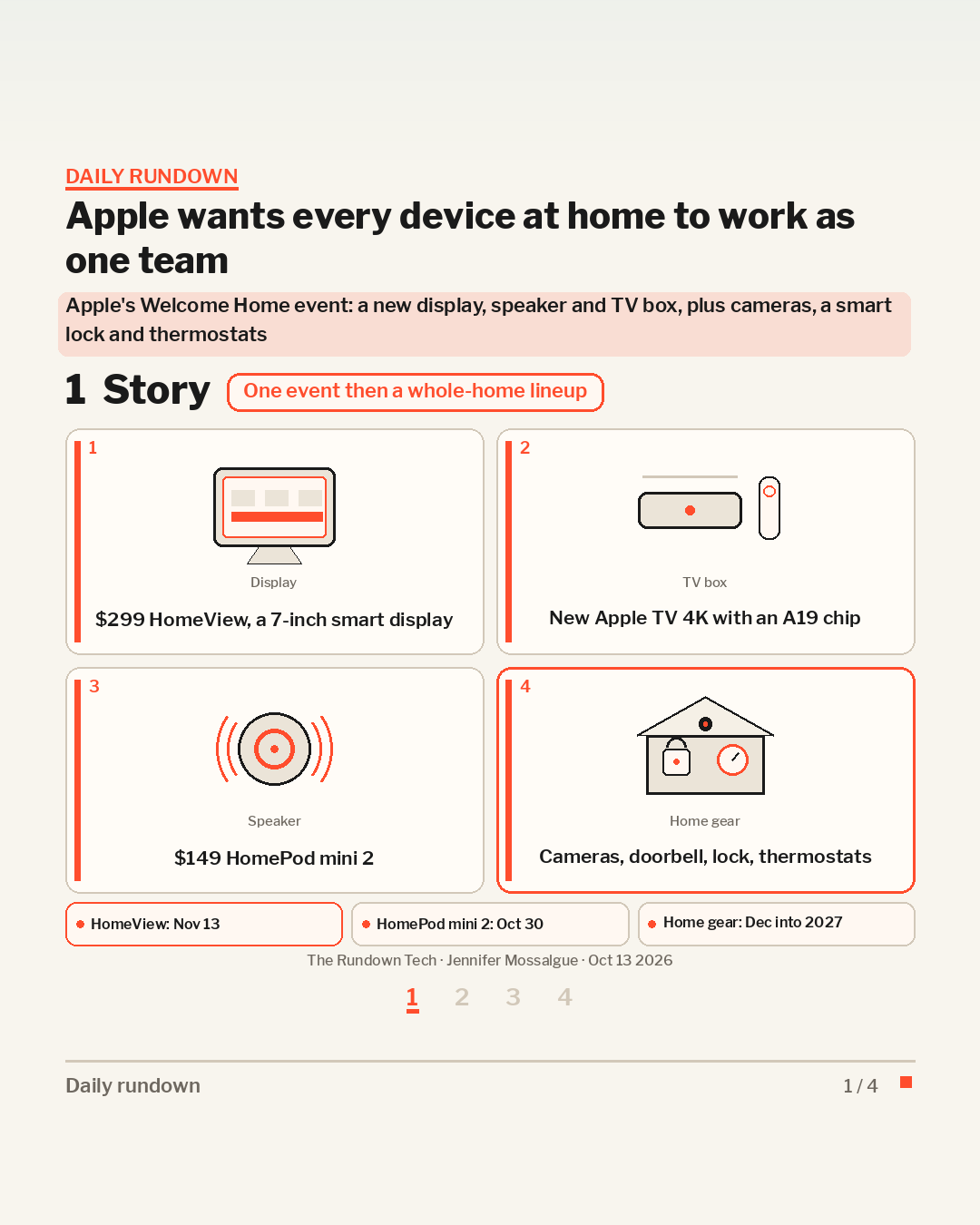
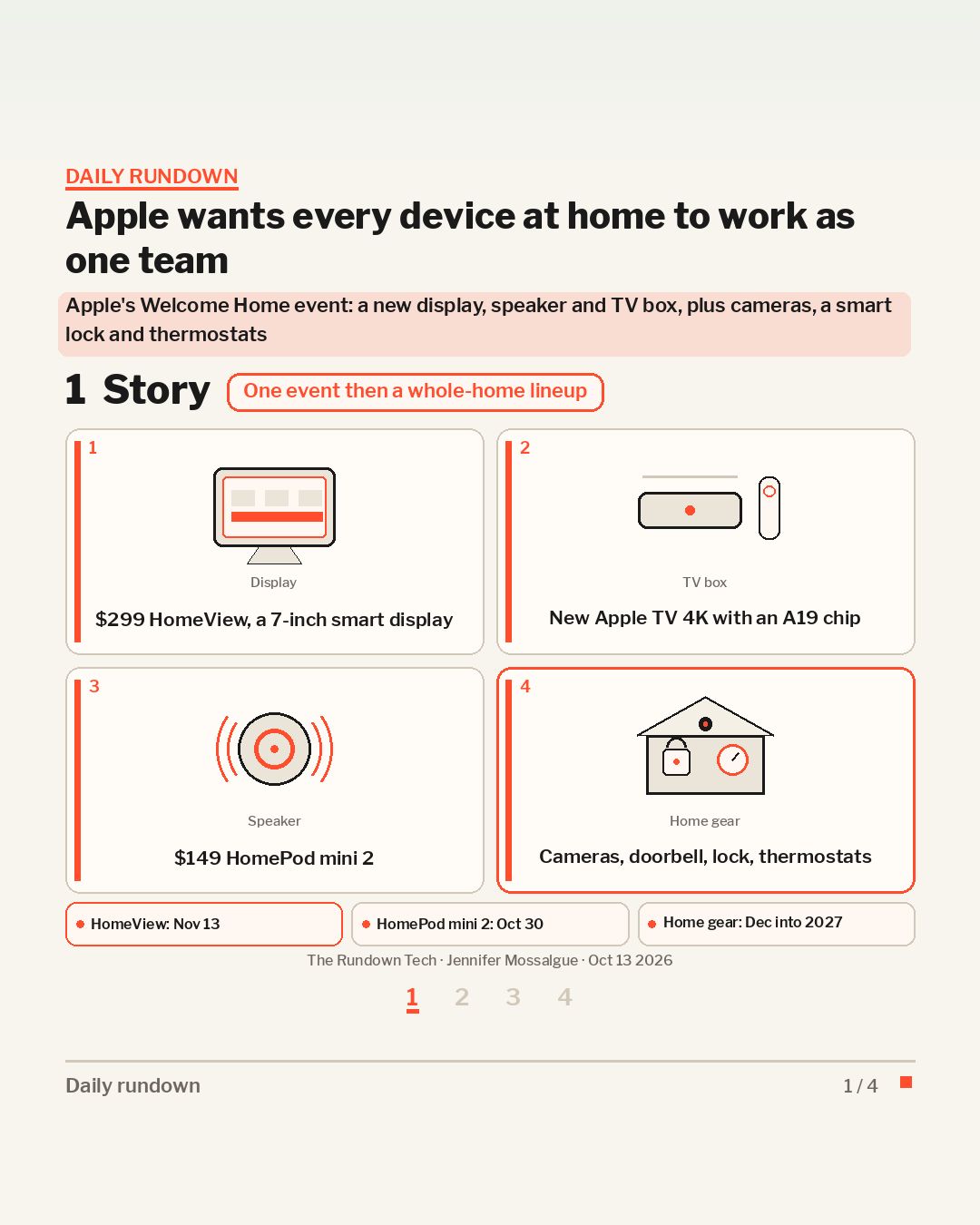
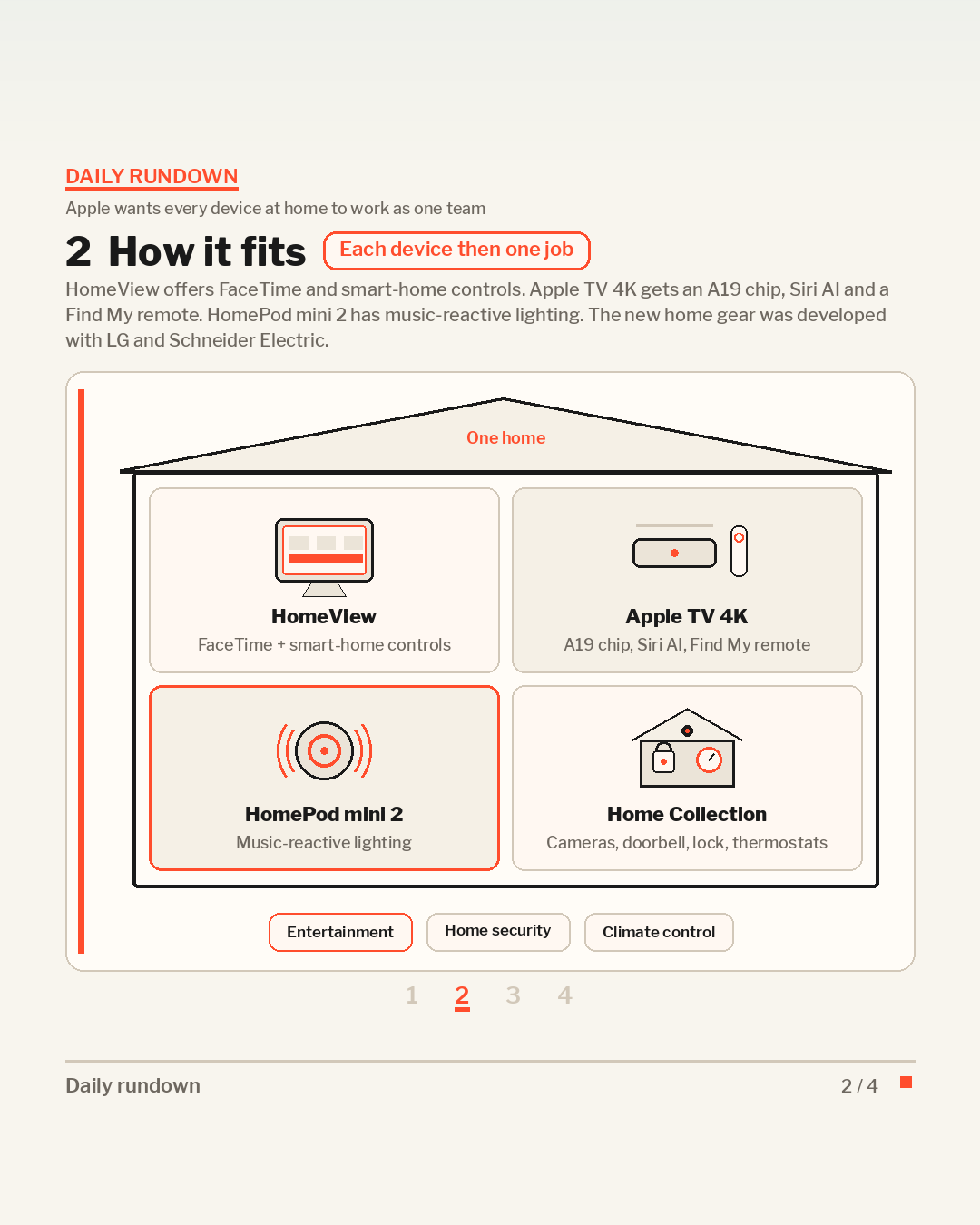
At its "Welcome Home" event in New York, Apple unveiled a wave of smart-home gear. The facts below are only what The Rundown published:
|
HomeView $299 · 7-inch · FaceTime + smart-home controls · Nov. 13 |
Apple TV 4K A19 · hands-free Siri AI · Find My remote · Nov. 13 |
HomePod mini 2 $149 · S10 · music-reactive lighting · Oct. 30 |
Home Collection cameras · doorbell · lock · thermostats · LG + Schneider · Dec–2027 |
That lineup stretches Apple's challenge to Amazon and Google across entertainment, home security, and climate control.
How AI is specifically meant to help this bet succeed (facts only)
This was not "ask a chatbot for a smarter house." The Rundown's published claim is narrower:
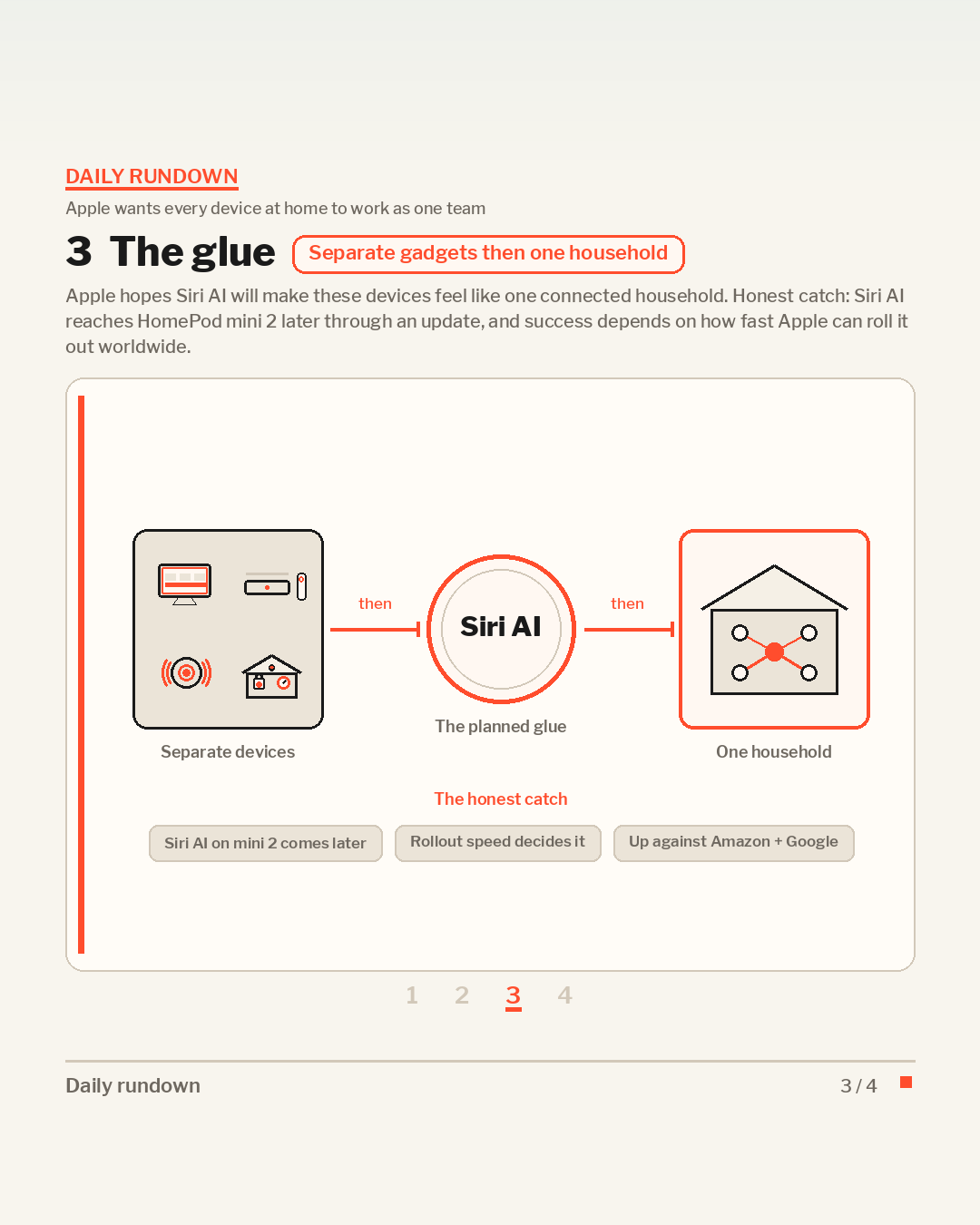
- Siri AI is the planned glue. Apple hopes Siri AI will make those separate devices feel like one connected household — not a pile of apps that each do one job alone.
- Where it already shows up on paper. Hands-free Siri AI is part of the new Apple TV 4K story (with A19 and Find My remote). Music-reactive lighting on the HomePod mini 2 is a concrete "notice a signal → change the lights" behavior already named in the coverage.
- The honest catch (also on the record). Siri AI comes to the HomePod mini 2 later through an update, and The Rundown notes that success will depend on how quickly Apple can roll it out to customers worldwide. The competition named in the same piece: Amazon and Google.
So AI's job here, as published, is specific: turn a stack of displays, speakers, cameras, locks, and thermostats into one household that can notice a signal, decide, and act. The article does not publish accuracy percentages, training hours, or a measured success rate — and this post does not invent any.
What CodeSky kids practice when we teach from cases like this
At our Markham afterschool we do not ask kids to buy Apple's lineup. We do ask them to practice the same computational thinking shape under the hardware:
- Decomposition — split "make the house feel connected" into notice a signal → decide → act → test and tweak.
- Abstraction — treat each device as one job (display, speaker lights, lock, thermostat), then treat Siri AI as the hub that is supposed to join those jobs — without pretending the hub is already finished everywhere.
- Algorithms — write a loop a machine can finish: sense → rule → action → try again (the music-then-lights mini version kids can build today).
- Pattern recognition — notice the same loop on a Scratch stage light, a micro:bit reaction, or a hallway night-light rule at home.
In classroom language that maps to see with a sensor → judge with a rule → run a mission. A kid who can name those steps can use AI as a tool inside a system they still own — not as a substitute for thinking.
Trial invite
Walk-in coding afterschool in Markham.
9833 Markham Rd Unit 2, Markham, ON L6E 0E5
Email info@codesky.ca
Follow CodeSky
- Instagram: @codeskyca
- 小红书 (Xiaohongshu / RedNote): CodeSky profile
- WeChat 公众号: search codeskyca
Sources
- The Rundown Tech: "Apple goes all-in on the home" (Jennifer Mossalgue, 2026-10-13), including HomeView, Apple TV 4K, HomePod mini 2, Apple Home Collection, Siri AI glue claim, later mini-2 update, and rollout-speed caveat summarized above.
- CodeSky Xiaohongshu note pack
2026-10-14-苹果想把家连起来(same fact list; notice → decide → act → test bridge).